

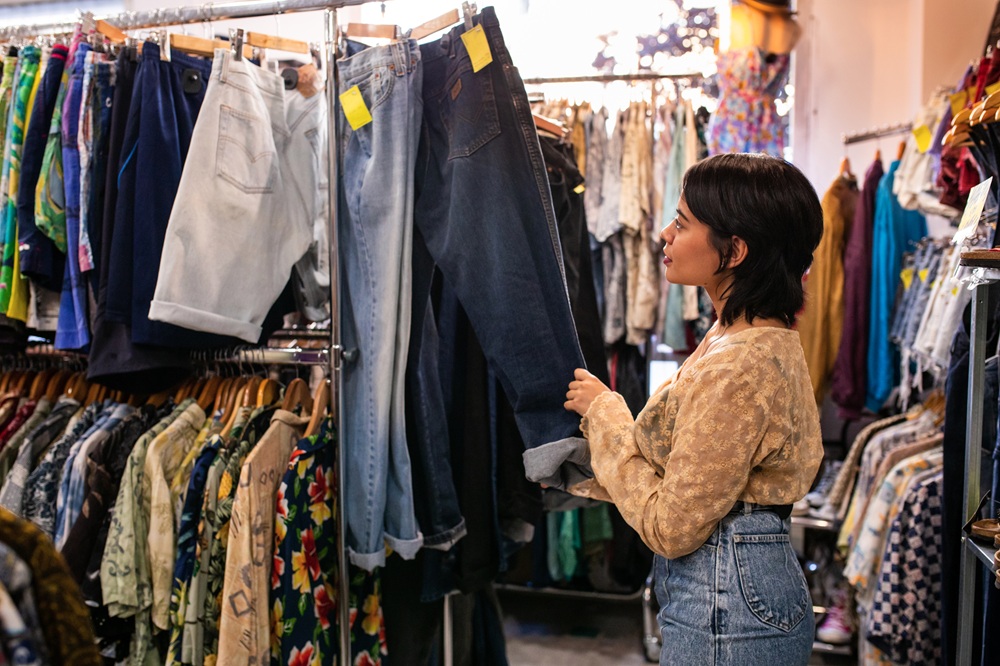
You find it on the rack, and you know immediately. The fabric is good, the label is right, and the price is almost embarrassing. You buy it without thinking twice. Then you get home, try it on, and realize the shoulders sit wrong and the waist needs work. Now it hangs in your closet while you try to decide whether spending money on alterations actually makes sense.
The question is not whether you love the piece. You already do. The question is whether it can deliver what you are hoping for. Here is how to find out.
Check the Fabric Quality and Durability
An alteration is only as good as the material it is performed on. Weak or degraded fiber does not hold stitching well, does not press cleanly, and shows every adjustment as a visible distortion. Fabric is the first filter, not the last.
Fibers That Reward the Investment
Wool is the best alteration fabric in existence. It responds to steam, holds a pressed crease with precision, and recovers its shape after being let out or taken in. A wool blazer or coat that fits poorly is almost always worth evaluating further. Dense denim and heavy cotton are nearly as forgiving. Seams can be moved, hems can be reset, and the fabric has enough body to absorb changes without puckering.
Silk and chiffon are a different story. These fabrics show needle holes permanently and are unforgiving of stitching errors. Unless the required alteration is extremely minor, fragile fabrics drive up both the cost and the risk.
How to Test What You Are Holding
Gently stretch a small section between your fingers and release it. Healthy fibers spring back. Degraded fibers stay slightly distorted or feel thin and papery at the stretch point. Run your thumb firmly across the surface. Pilling, a dusty texture, or any sensation of shredding means the fabric has already broken down. No alteration will fix that.
Evaluate the Overall Construction of the Garment
Two garments can look identical on a rack and have completely different bones. Construction determines whether an alteration holds up over time or slowly unravels after a few wears.
Seams, Finishing, and Lining
Turn the garment inside out. On a well-made piece, seam allowances run at least half an inch, often more. That extra fabric is what gives a tailor room to work. A garment with quarter-inch seams has almost no margin for letting out. Check how those seams are finished, too. Serged edges, edges bound with fabric tape, or flat-felled seams signal a manufacturer that built for longevity. Raw edges already fraying signal the opposite.
On structured garments such as blazers, press lightly on the chest with your palm. A quality jacket has a canvas or fused layer that feels firm and returns to shape. If the chest feels completely flat and floppy, it is a cheaply constructed piece that may bubble further under a tailor’s iron. If the lining is already pulling or separating at the hem, relining adds high cost before a single fit adjustment has been made.
Consider How Much the Fit Needs to Change
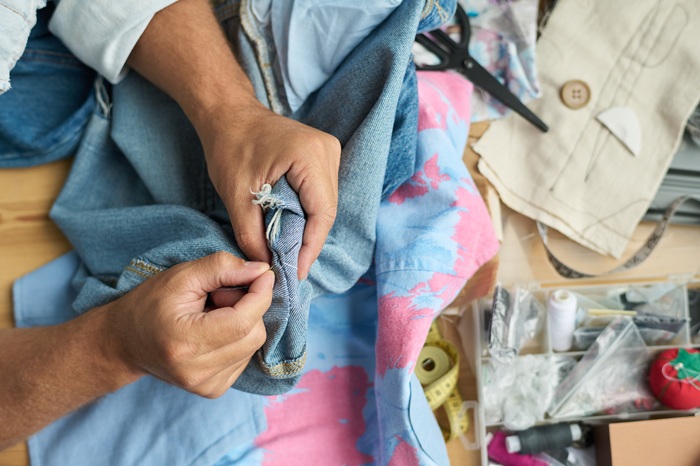
This is where most thrift store alteration decisions go wrong. People underestimate what a given change requires, and a seemingly quick fix becomes a project that costs more than the garment is worth.
Minor Work Versus Reconstruction
Taking in the sides of a dress or blazer is minor. Hemming trousers or shortening sleeves on an unlined jacket are both manageable. These changes preserve the original proportions of the garment and require relatively little labor.
Raising or lowering a shoulder seam is a significant alteration. It means reopening the sleeve, adjusting the armhole, and reattaching everything to maintain the original balance of the garment.
On a jacket, that work can run two hundred dollars or more. Resizing by more than two sizes typically means rebuilding the garment rather than adjusting it, and the math rarely works in the buyer’s favor.
The Shoulder Rule
If the shoulder seam does not sit at your actual shoulder point, the alteration required to correct it will likely cost more than the piece justifies unless it is genuinely exceptional. Shoulders determine every other proportion on a jacket. When they are right, most other fit problems become solvable. When they are wrong, every other adjustment compensates for a fundamental flaw.
Inspect for Hidden Damage or Stains
Thrift store garments have a history that rarely shows on the surface. A quick check before committing to an alteration saves you from paying a tailor to work on something that cannot be fully restored.
Where Damage Hides
The underarm area is the most commonly compromised area on any upper-body garment. Hold up the piece to light and look directly at the underarm fabric. Thinning, discoloration, or a slightly sheer quality means the fibers have broken down. A tailor can work around degraded fabric, but cannot reverse it.
Fold back the hem and examine the fold line. A sharp, worn crease set for years may crack or leave a permanent line if the hem is let down. On trousers, a deeply set ghost crease will leave a visible shadow even after professional pressing.
For stains, location is everything. A mark on an interior lining or hem allowance is invisible in wear. A stain on the chest, the seat, or across a visible seam area is a different problem entirely. Old protein stains with a yellowish or grayish cast have usually been heat-set through previous washing and are not going anywhere. Assume permanence and factor that in before spending money on a tailor.
Think About the Style Potential of the Garment
Some pieces have bones worth building on. Others are so rooted in a specific era that no alteration makes them feel current. A well-fitted version of the wrong silhouette is still the wrong silhouette.
Classic Versus Dated
Classic proportions age slowly. Consider a single-breasted blazer with a notch lapel, straight-leg trousers, and a shirt dress with a defined waist. These silhouettes reappear in most collections every few years, which means a well-made version from twenty years ago can be brought forward without looking like a costume.
Heavily trend-specific details cannot usually be altered away. Wide patch pockets, oversized novelty buttons, very specific collar shapes, and dramatic shoulder padding all signal a particular moment in time in ways tailoring cannot erase.
Ask the honest question before committing: Would you wear this today if it fit perfectly right now? Not someday. Right now. If the answer is yes and fit is the only obstacle, proceed. If there is hesitation beyond the fit, the issue is style, and a tailor cannot solve that issue.
Compare Alteration Cost with the Value of the Garment
This is the calculation most people skip. Alteration cost depends on complexity, fabric, garment type, and the skill level of the tailor. Hemming trousers, shortening sleeves, taking in a waist, replacing a zipper, and resizing a jacket are all very different jobs with very different price tags. Get a real quote before committing, not a guess.
How to Decide
Add what the garment costs to the tailor’s quote. That total is what you are actually paying for the piece. A ten-dollar blazer that needs eighty dollars of work is a ninety-dollar blazer. If a comparable blazer in good condition retails for a hundred and fifty, the math holds. If it retails for sixty, it does not.
Alterations make the most sense when the garment is made from material or by a brand that is genuinely hard to find at any price, when the required work is minor relative to the utility of the piece, or when it fills a specific wardrobe gap that would cost significantly more to fill with something new. They make the least sense for fast-fashion, heavily trend-specific pieces, or anything with hidden damage that limits how long it will actually stay wearable.
Turn Your Thrifted Find Into a Perfect Fit with Great American Cleaners
Once you decide a thrifted piece is worth the investment, have it professionally cleaned before alterations. Removing accumulated soil, odors, and dust gives your tailor a cleaner garment to work with and helps prepare it for fitting and finishing.
Great American Cleaners provides professional alterations and repairs for customers in Danville, CA, from hemming and waistband adjustments to zipper repairs and other garment alterations. We also offer dry cleaning and Wash and Fold Laundry Service, making it easy to handle multiple garment care needs with one team.
For added convenience, customers throughout Danville, including Downtown Danville, residential areas, apartment complexes, gated communities, and business districts, can use our FREE Pickup and Delivery Service. Schedule service online or call (510) 526-6844 to get started.
Prefer an in-person visit? You can also bring your garments to one of our physical store locations throughout the Bay Area.