

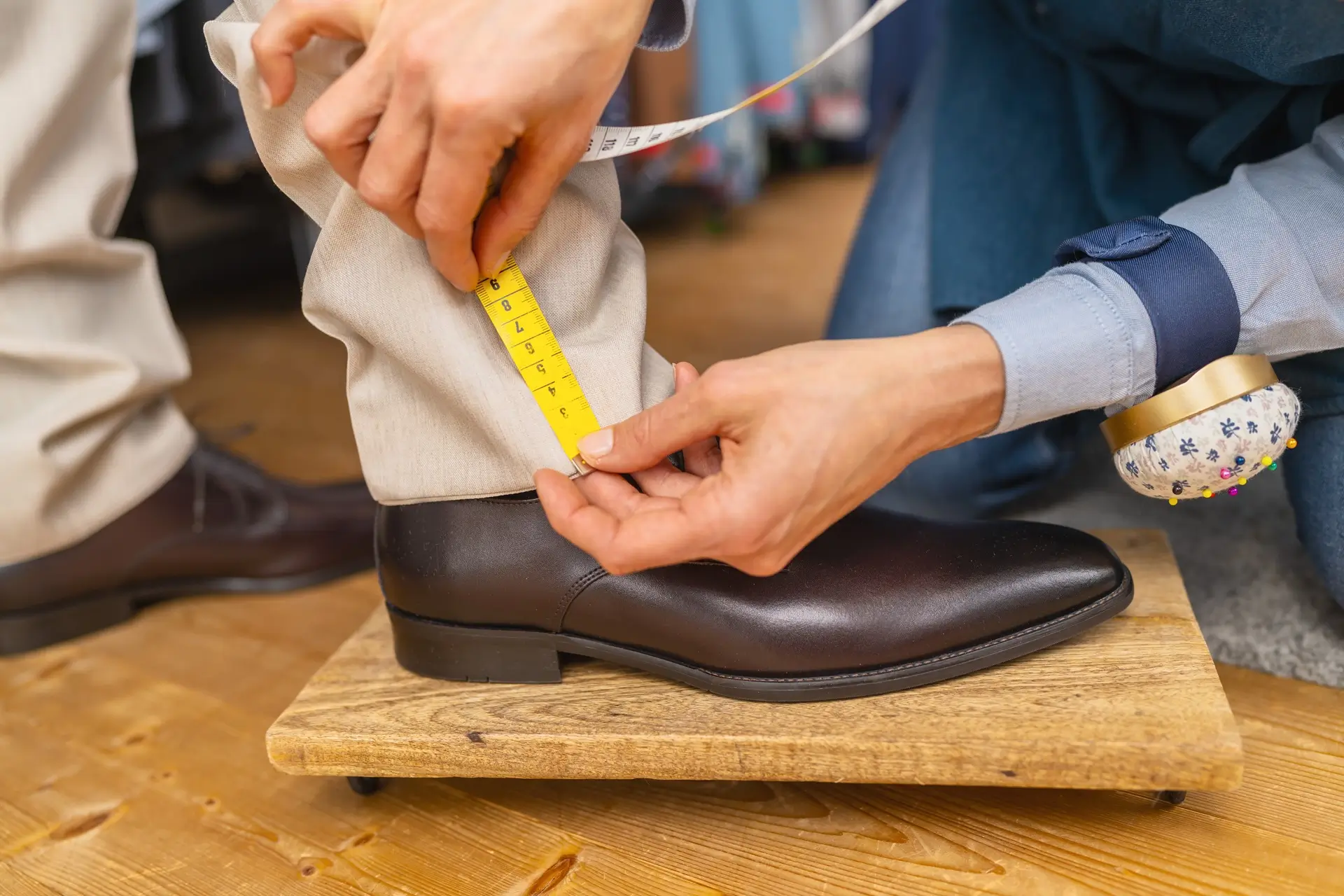
What is the perfect hem length? It’s easy to focus on the waist, shoulders, or sleeve length when you judge the fit of an outfit. Yet the hem often has just as much influence over whether or not your clothes look balanced and intentional.
When trousers bunch around your shoes or a skirt ends at an awkward point, you can usually tell something feels off, even if you cannot quite explain why. Different garments need specific hem lengths. Knowing where each should fall helps you pinpoint the problem.
Trousers and Chinos: Where the Hem Should Meet the Shoe
Start with the break, the fold created where the trouser leg meets your shoe. A correct break keeps the line clean from hip to ankle. If fabric bunches or floats above the shoe, the hem needs attention.
Use these three reference points:
- No break: the hem reaches the top of the shoe without forming a fold. This sharp, modern length suits tapered trousers, chinos, loafers, and clean sneakers.
- Slight break: one soft fold forms at the front. This is the most reliable starting point for business trousers and versatile everyday fits.
- Full break: extra length creates deeper folds or stacking near the ankle. It works best with wider, traditional cuts but can look untidy on slim legs.
Let the shoe and silhouette guide the final choice:
- Sneakers and loafers usually favor a shorter hem.
- Structured lace-up shoes can support slightly more length.
- No or minimal break can lengthen your visual line, while taller frames and wider trousers can carry more fabric.
Do not measure from one point alone. Wear the shoes you plan to pair with the trousers and fasten them at their usual waist position. A tailor should check both the front break and back clearance so the hem hangs evenly without dragging.
Cuffs are optional. A folded cuff adds weight at the ankle and can balance chinos or fuller trousers. Keep it only when it balances the proportion.
Jeans: Different Cuts, Different Rules for Straight, Slim, and Wide-Leg
Jeans need different hem lengths because each cut falls around the shoe differently. Wear the shoes you use most often before anyone pins or cuts the denim.
Use these starting points:
- Straight-leg: aim for a slight break or a clean touch at the top of the shoe.
- Slim or skinny: end near the ankle bone with little or no break. Extra length quickly bunches around a narrow opening.
- Wide-leg or flare: leave enough length for the hem to fall close to the floor in your chosen shoes without dragging or catching under your heel.
Choose the finish before altering: the original factory hem, a clean folded edge, or a raw, frayed edge. Changing direction later can cost you valuable length.
Cropped Pants and Ankle-Length Trousers
Cropped pants should show deliberate space between the hem and shoe. For most ankle-length trousers, start at the ankle bone or about one inch above it. That reveals a narrow line of skin without cutting across the fullest part of your calf.
Adjust that starting point to the outfit:
- Flats or loafers: keep the hem close to the ankle bone for a long, clean line.
- Heels: you can raise the hem slightly because the shoe adds visual length.
- Shorter frames: a modest lift above the ankle can lengthen your proportions.
- Taller frames: you can usually carry a lower, ankle-level hem comfortably.
Wider crops often sit higher than slim cuts. Pin the hem in your planned shoes.
Suit Trousers for a Formal Setting vs. Business Casual
Suit trousers should respect the setting, but clean fit comes first. Formal does not automatically require a full break, and business casual does not always demand a bare ankle. The trouser cut, shoe, and level of formality should work together.
Use these guidelines:
- Formal occasions: choose a slight to moderate break with the hem resting neatly on a polished dress shoe. Wider or pleated trousers can carry more length without collapsing.
- Business casual: no break or a slight break creates a cleaner line with loafers, derbies, or refined sneakers.
- Flat-front suits: keep the break controlled. Too much fabric at the ankle makes a tapered leg look bottom-heavy.
- One suit for several settings: choose a slight break. It looks polished at a wedding and still feels current in a modern office.
Why the Same Suit Looks Sharp at a Wedding and Awkward at a Startup
A hem changes its message with the room. A deeper break can reinforce traditional formality, especially with a fuller trouser and substantial shoe. In a casual workplace, the same pooling may look accidental rather than deliberate.
Still, do not hem trousers only to match other people. Start with your proportions and the shape of the trousers, then account for where you will wear them most.
Take your intended shoes to the fitting and wear the trousers at their usual waist height. If you rotate between shoes with different heel profiles, choose the pair you wear most often.
Dresses: Where the Hem Falls Changes What the Dress Says
Every few inches of hem length changes what a dress communicates:
- Above the knee: casual to semi-formal, younger, easy for daytime or a first date.
- At the knee: the most versatile length you own, equally at home in the office and out for dinner.
- Midi, between knee and ankle: dressier, and the length most weddings and formal events call for right now.
- Maxi, ankle-length or longer: goes formal or very casual depending on the fabric, with almost nothing in between.
Shorter frame? A maxi can swallow your silhouette unless the dress has a slit or a fitted waist. More height to spare? Midi and maxi lengths usually work straight off the rack, no alteration needed.
One tailoring tip worth knowing: a bias-cut dress can drop an inch or more after it’s been worn and washed a few times, so don’t chase an exact length on day one. Ask your tailor to hem it after the fabric has had a chance to relax.
Skirts: The Three Lengths and What Each One Signals
Skirts follow a simpler version of the same logic:
- Mini, above mid-thigh: casual, youthful, low stakes.
- Knee-length: the safest choice for a professional setting, and flattering across most body types.
- Midi or maxi: dressier, more formal, or more bohemian depending on the fabric and cut.
Fabric weight decides more than length here. A stiff fabric holds its line no matter how you move. A flowy fabric shifts as you walk and can look shorter than it actually measures the moment you sit down.
Pleats add another wrinkle. A pleated skirt reads longer than a straight skirt at the exact same length, since the folds add movement that draws the eye downward.
Shorts: The Range That Actually Flatters Most People
Start with a hem at mid-thigh, roughly two to three inches above the knee. This range suits many casual shorts without looking abbreviated.
Adjust from there:
- Shorter frames: keep the hem clearly above the knee. Extra length can interrupt your leg line.
- Taller frames: you can carry a slightly longer inseam while keeping the shape balanced.
- Fuller or wider cuts: let the hem sit a little lower so the fabric hangs rather than flares.
- Higher-rise styles: they can make the same inseam appear shorter than it does on a low-rise pair.
Judge the full proportion, not just the inseam.
How Your Height and Shoes Change the Right Hem Length
Before your tailor marks the hem, answer two questions: which shoes will you actually wear with this garment, and where should the hem place the visual break on your frame?
Take the shoes to the fitting. Even a small change in heel height alters where trousers, skirts, and full-length dresses meet the floor. A higher heel lifts the hem, while a flatter shoe brings it closer to the ground and may create pooling.
If you rotate between several pairs:
- Take the highest and lowest options.
- Ask your tailor whether one practical length can work across both.
- Prioritize the shoes you wear most if the heights differ too much for one hem.
Use height as a guide, not a rule. Shorter frames often look cleaner with less break and a hem that avoids cutting the leg at its widest point, while taller frames can often carry more length, deeper breaks, and wider silhouettes without losing proportion.
Your posture, leg shape, garment rise, and fabric weight matter just as much as height. Judge the line in a full-length mirror before approving the pin.
What to Take to Your First Hem Fitting
Walk in prepared and you’ll need fewer return trips:
- The exact shoe you plan to wear with the garment.
- A cleaned or pressed garment, not straight from a bag with travel wrinkles setting the fold.
- A clear picture of the setting: office, wedding, everyday wear.
- Your hem finish preference, cuffed, clean, or raw, if you already know what you want.
Show up with these four, and your first cut at alterations is usually your only cut.
Not Sure What Length Suits You? We Advise Before Making a Single Cut
The right hem depends on more than a standard measurement. Your shoes, proportions, the way the garment drapes, and where you plan to wear it can all influence where the hem should fall.
For customers in El Cerrito, CA, looking for professional alterations, the alterations team at Great American Cleaners considers the complete look and provides an honest recommendation and estimate before any alterations begin.
Book a fitting and bring the shoes you plan to wear with the garment. Visit us at 215 El Cerrito Plaza, El Cerrito, CA 94530, or take advantage of our FREE Pickup and Delivery Service available in El Cerrito and other surrounding service areas.
Phone: (855) 627 2160