

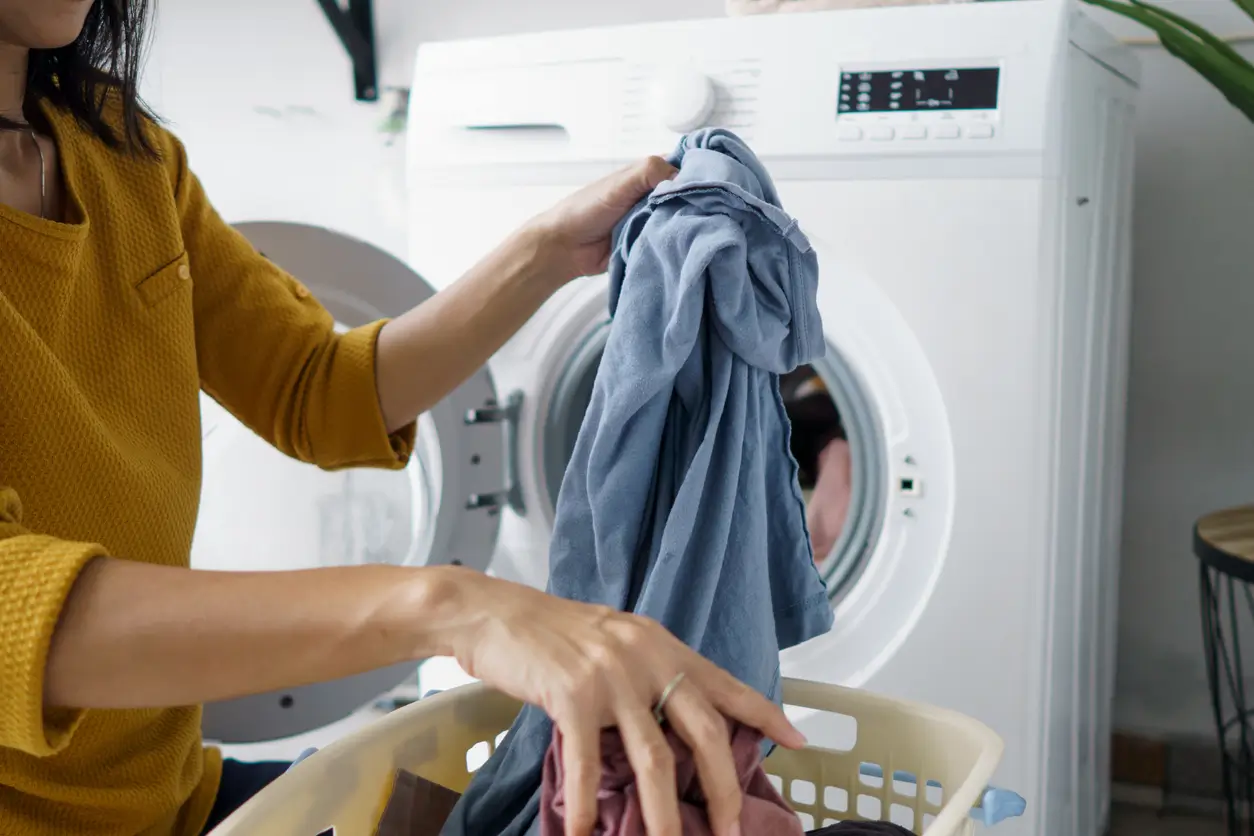
Cold water is supposed to be safe. Delicate cycle is supposed to be gentle. Air drying is supposed to protect the shape. Most people who shrink garments are following the rules when shrinkage happens, which is why it’s so frustrating and so confusing.
The problem isn’t the instructions. It’s that “shrinkage” describes three completely different processes happening in the fiber, and a care label only protects against one of them at a time. Cold water stops one trigger. It doesn’t stop the other two.
Here’s what’s actually happening inside the fiber, and which garments each mechanism is coming for.
Shrinkage Isn’t One Thing: It’s Three Different Mechanisms
Textile scientists sort shrinkage into three categories: relaxation, felting, and consolidation. Each starts from a different point in the fiber, gets triggered by a different mix of heat, water, and motion, and ends in a different outcome.
A cotton tee that shrinks on wash one is going through something completely different than a wool sweater that shrinks after one trip through the dryer. Knowing which category you’re dealing with tells you if the damage is fixable, and whether or not that fabric is worth risking in your machine again.
Type 1: Relaxation Shrinkage: Fibers Returning to Their Natural Length
Manufacturing stretches yarn. Knitting machines pull fiber taut, finishing processes stretch it further, and that tension stays locked in the fabric until water releases it. Submerge a cotton jersey tee or a lightweight knit sweater, and the fibers absorb moisture, the stored tension lets go, and the garment drops to its true, unstretched length.
You’re not shrinking new material. You’re watching stretched material give back what it was holding onto. It’s the same reason a pair of raw denim jeans always feels tighter through the leg right out of the package than after the first wash, just running in the opposite direction.
Why the First Wash Is Usually the Most Dramatic
A brand new knit loses more size in its first wash than in the next ten combined, and that’s not a fluke. Most of the manufacturing tension releases the moment the fabric first gets fully saturated. After that, there’s little tension left to give up, so later washes barely move the needle.
Catch it early: gentle stretching while the garment is still damp after that first wash can recover some of that length, though it rarely lands back at the exact original size.
Type 2: Felting Shrinkage: Wool and Animal Fibers Locking Together
Wool, cashmere, and angora fibers are covered in microscopic scales that overlap like shingles. Flat and undisturbed, those scales do nothing. Add heat, moisture, and agitation at the same time, and the scales lift and grab onto each other.
Every tumble in a washing machine locks more of them together, pulling the yarn tighter and the fabric denser. That’s what turns a sweater that fits into one that fits a much smaller frame.
The dryer is often the final stage: a gentle cold wash may begin the felting process at a low level, but the dryer’s heat and tumbling agitation complete it. This is why wool pieces that survive the wash cycle correctly still come out of the dryer felted. The machine wash started something the dryer finished.
Why Felting Is Essentially Permanent and Cannot Be Reversed at Home
Interlocked scales don’t separate again. Not with conditioner, not with a vinegar soak, not with careful stretching, no matter what a laundry hack video promises. Damp stretching can buy back a small amount of size before the fibers hit their limit and start breaking instead of giving.
If a wool or cashmere piece has already felted, you’re deciding how to work around the new size, not undoing what happened to it.
Type 3: Consolidation Shrinkage: Cotton and Linen Tightening Under Heat
Cotton and linen don’t have scales, so felting isn’t the risk. Their fibers swell when wet and the weave loosens slightly, but the real damage happens once the dryer takes over. High heat pulls out the moisture fast, the weave snaps back tighter than before, and the fabric consolidates into a smaller, denser version of itself.
This kind of shrinkage rarely shows up all at once. It builds, wash after wash, dry after dry, until a shirt that used to button easily no longer closes.
Why Home Washers and Dryers Trigger All Three at Once
A washing machine and dryer don’t isolate these mechanisms. They stack them. Agitation in the washer drives felting. Heat in the dryer drives consolidation. Water saturation across both steps drives relaxation.
Run a normal cycle, and every fiber in the load meets the exact combination of forces that causes its specific type of shrinkage. There’s no setting on a home machine that turns off one of those forces while leaving the others running.
Which Natural Fibers Are Most at Risk: and Why the Label Alone Isn’t Enough
A care label tells you what the manufacturer recommends for an average version of that fabric. It’s based on a single test run of a single production batch, not the specific sweater hanging in your closet. Two wool sweaters can carry the same “hand wash cold” instruction and shrink at completely different rates, because the label was never built to account for variation in the first place.
Watch closest with:
- Wool, cashmere, and angora sweaters
- Silk blouses and scarves
- Unstructured linen shirts and trousers
- Loosely knit or unmercerized cotton
- Wool blend suiting and tailored jackets
- Rayon and viscose, which act like natural fibers once wet
If your garment is on this list, treat the label as a starting point, not a guarantee.
How Dry Cleaning Avoids Every Trigger That Causes Shrinkage
Solvent-based dry cleaning removes water from the process entirely, and water is the common thread behind all three shrinkage types. No water means cellulose fibers never swell, so consolidation shrinkage has nothing to trigger it. No tumbling agitation means wool’s scales stay flat, so felting can’t start. No saturation means knit fibers never relax out of shape.
Finishing happens by hand or on equipment matched to the fabric, not in a dryer running one heat setting for everything in the load.
Can You Fix a Garment That’s Already Shrunk? A Realistic Answer
What you can do depends entirely on which type of shrinkage you’re up against.
Relaxation shrinkage (knits, cotton tees, lightweight sweaters):
- Soak the garment in cool water with a small amount of hair conditioner or wool wash.
- Lay it flat on a towel and gently stretch it back toward its original dimensions.
- Let it air dry completely flat, re-stretching once or twice as it dries.
Consolidation shrinkage (woven cotton, linen):
- Steam the garment thoroughly to relax the tightened weave.
- Stretch it gently while it’s still warm and damp from the steam.
- Expect partial recovery, not a full return to size.
Felting shrinkage (wool, cashmere, angora):
There’s no reliable home fix here. If the piece matters, have a professional assess it before you try anything that risks snapping the fibers instead of stretching them.
Whichever type you’re dealing with, the fix works better the sooner you catch it. A garment that’s been reshaped and dried once already has less fiber flexibility left for a second attempt.
The Garments Worth Taking Out of the Home Laundry Rotation Entirely
Some pieces aren’t worth the risk of a single bad cycle. Move these permanently to professional care:
- Wool and cashmere sweaters
- Silk blouses, ties, and scarves
- Tailored wool trousers, blazers, and suits
- Structured linen pieces
- Dress shirts with fused interfacing or collar stays
- Any garment you’ve already shrunk once and had altered or repaired
Once a piece has already been through relaxation or partial consolidation shrinkage, it has less room left before the next wash pushes it out of shape for good.
For Garments You Cannot Afford to Shrink, Bring Them to Great American Cleaners
Some garments simply aren’t worth risking in a home washer. Meaders Cleaners helps Greenbrae, CA customers protect natural-fiber sweaters, silk blouses, tailored suits, dress shirts, and other delicate pieces with professional dry cleaning that preserves shape, texture, and fit. Instead of relying on one wash setting for every fabric, we use garment-specific cleaning methods that remove the guesswork and reduce the risk of shrinkage.
If you’re hesitant to wash a garment at home, call us to discuss it or bring it to Meaders Cleaners at 220 Bon Air Center in Greenbrae. If another store is more convenient, see our other locations.
We also offer pickup and delivery in these ZIP codes:
- 94925
- 94939
- 94941
- 94920