

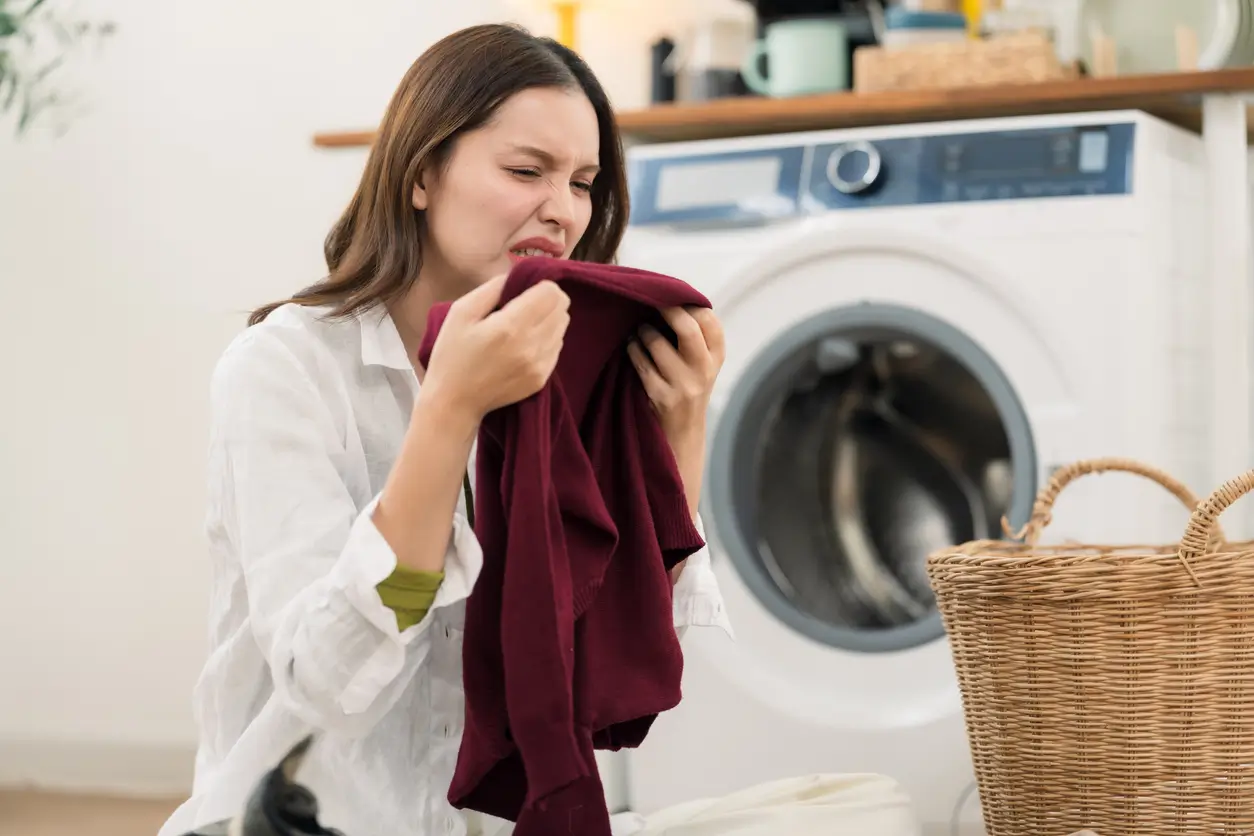
Start by ruling things out. If the smell hits you the moment you open the dryer, it’s musty or mildewy, and moisture is the problem somewhere in the process. If it’s more sour or stale, especially on towels, bacteria survived the wash and are still in the fabric. If everything smells fine until you actually put on the garment, that’s oil trapped in the fibers, waking up with body heat.
One of these three descriptions matches what’s happening in your laundry right now.
Start With the Machine, Not the Clothes
Before changing your detergent or washing routine, inspect the machine itself. A washer stays warm and damp after each cycle, allowing detergent residue, fabric oils, and microbes to form a film inside hidden areas. Once that buildup develops, clean laundry can pick up a musty or sour odor during the wash.
Start with these maintenance steps:
- Run an empty cleaning cycle. Use the machine’s self-clean setting or the hottest cycle recommended in the manual with a manufacturer-approved washer cleaner.
- Wipe the door and seal. Remove moisture, lint, and residue after unloading a front-loader.
- Dry the interior. Leave the door and detergent drawer slightly open between loads when it is safe to do so.
- Repeat regularly. Follow the cleaning schedule in your machine’s manual, especially if you wash mainly in cold water.
The Three Places to Actually Look
Odor-causing buildup often hides outside the visible drum. Check these areas closely:
- Rubber door gasket: pull back each fold and look for trapped water, lint, dark spots, or slippery residue.
- Detergent dispenser: remove the drawer completely and inspect both the tray and the compartment behind it for standing water or caked product.
- Filter or drain trap: locate it using the manual, then check for lint, coins, debris, and stagnant water. Place a towel underneath before opening it because retained water may drain out.
Dark discoloration may indicate mold or mildew, while a gray or clear slippery layer often points to residue and microbial film. You do not need to identify the exact growth before cleaning it, but its location can help you trace the odor.
If the gasket holds the buildup, focus on cleaning and drying the door area. If the smell comes from the dispenser, filter, or drum, clean those components and run the recommended maintenance cycle before washing another load.
How Long Did That Load Sit in the Drum?
This is the cause most people already suspect, because nearly everyone has lived through it. Bacteria start colonizing damp fabric within hours in a warm, closed drum, and once that’s happened, drying the clothes doesn’t undo it. Neither does an extra scoop of detergent.
Be honest with yourself about the timeline. A load forgotten for an evening usually comes back fine after one more wash. A load left over a weekend often needs a hot wash, sometimes two, before the smell actually clears. Go straight to rewashing instead of running it through the dryer and hoping heat will handle it. Heat tends to set the smell rather than lift it.
You’re Probably Using More Detergent Than the Load Needs
Using more detergent does not automatically produce cleaner clothes. When the washer cannot rinse it away completely, residue stays in the fibers and traps body oils, soil, and odor-causing bacteria. That buildup can make freshly washed laundry smell sour or musty, especially after it warms against your body.
Look for these signs of detergent overuse:
- Clothes feel stiff, waxy, or slippery after drying.
- Towels absorb less water than they used to.
- The washer produces heavy suds during the rinse cycle.
- White marks or a dull film appear on dark fabrics.
- Odor returns soon after you put on the garment.
To test the amount, use less detergent for your next few loads and check whether or not the smell improves. Measure according to:
- The load size.
- The soil level.
- Your water hardness.
- The detergent concentration.
- Your machine type.
High-efficiency washers need an HE-labelled detergent because they clean with less water and require a low-sudsing formula. Avoid filling the cap by habit; concentrated products may need only a small measured amount. If residue has already built up, run the affected clothes through an extra rinse without adding more detergent.
The Load That Smells Fine Until You Put It On
Some clothes smell clean in the drawer but develop an odor within minutes of wear. This often happens with workout shirts and other synthetic garments because polyester holds onto body oils more readily than many natural fibers. As body heat warms the fabric, trapped odor compounds become noticeable again.
Common signs of fiber-level buildup include:
- The garment smells fine when it is cool and dry.
- Odor returns quickly during exercise or warm weather.
- The underarm area smells stronger than the rest of the fabric.
- The problem becomes more noticeable after repeated wears.
- Polyester garments develop odor faster than cotton items washed in the same load.
To remove the buildup:
- Choose the right detergent. Use an enzyme-based or sports detergent formulated to remove body oils from synthetic fibers.
- Pretreat odor-prone areas. Apply detergent to the underarms and other affected spots, following the product’s directions.
- Check the care label. Wash in the warmest water the garment safely allows.
- Skip fabric softener. It can coat synthetic fibers and make trapped oils harder to rinse away.
- Avoid overloading the washer. Clothes need enough room for water and detergent to move through the fabric.
Deodorant, antiperspirant, and body oils can gradually form a stubborn film around the underarms. If a favorite workout shirt has become smellier over time, this buildup may be the reason. Treating the affected fibers directly works better than adding fragrance that only covers the odor temporarily.
Cold Washing Is Fine: Never Washing Hot Isn’t
None of this is an argument against cold water. Most loads do fine in cold, and modern detergents are built to work at lower temperatures. That part of your routine is probably not the problem.
What matters is whether or not the machine itself ever sees hot water. A washer that runs exclusively on cold cycles builds up biofilm faster than one that gets an occasional hot wash, because cold water doesn’t fully dissolve detergent or clear out what’s colonizing the gasket. That’s exactly why the monthly maintenance cycle matters more in a cold-washing household, not less.
Overloading and Slow Drying
Overloading and slow drying create the same basic problem: fabric cannot move freely or release moisture. In the washer, crowded clothes receive less contact with water and detergent, leaving behind soil and residue. During drying, trapped moisture creates the damp conditions that allow musty odors to develop.
Check for these warning signs:
- Clothes remain tightly packed against the washer drum.
- Items come out tangled or still feel soapy.
- Thick fabrics stay damp long after lighter pieces dry.
- Laundry smells fresh at first but turns musty while sitting damp.
To improve the result:
- Reduce the load. Leave enough space for garments to lift, tumble, and separate.
- Move wet laundry promptly. Transfer it to the dryer or drying rack when the wash ends.
- Increase airflow. Space items apart and avoid crowding the dryer or rack.
- Check the dryer. Clean the lint screen and inspect the vent if loads take unusually long to dry.
Laundry should dry completely before you fold or store it.
The Reset: Fixing It Once, Properly
If more than one of these is happening at once, work through it in this order.
- Clean the machine first. Skip this step and every load you wash afterward gets recontaminated before it’s even done.
- Strip the affected items with a hot wash and no detergent. Repeat until the water runs clear of suds, not just clear of visible dirt.
- Adjust the habits that got you here: less detergent, faster unloading, faster drying.
Set your expectations honestly. Heavy buildup usually takes two or three passes to clear. Towels and bedding that have carried odor for years, through wash after wash, sometimes don’t fully recover on a home machine, no matter how many times you strip them.
Clothes Look Clean but Still Smell Off? Bring Them to Great American Cleaners
If towels, sheets, or everyday clothes still smell musty or sour after washing, adding more detergent usually will not solve the problem. The odor may remain because oils and product residue did not rinse away completely, the washer was overloaded, or the fabric dried too slowly.
Great American Cleaners in El Cerrito separates your laundry from other customers’ orders, inspects items for stains and special-care needs, and selects the appropriate detergent, cycle, and drying process. Comforters and blankets receive separate processing rather than going into a standard wash and fold load.
Have a load that still smells off no matter how many times you wash it? Make that your first test of our Wash and Fold Laundry Service. We’ll even pick it up and deliver it back for FREE when it’s ready.
Great American Cleaners
Address: 215 El Cerrito Plaza, El Cerrito, CA
Phone:(510) 526-6844
Email: help@greatamericandrycleaners.com
Corte Madera Cleaners
Address: 143 Corte Madera Town Center, Corte Madera, CA
Phone: (415) 924 1973
Email: cortemadera@greatamericandrycleaners.com
Meaders Cleaners
Address: 220 Bon Air Center, Greenbrae, CA
Phone: (415) 461 5600
Email: meaders@greatamericandrycleaners.com